Tajweed-Advanced-Course part-1

Part2Part3 -Part4

Tajweed Advanced Course (Part 1) The meeting of two letters Part 1 (introduction) (الحرفان الملتقيان الجزء الاول (المقدمة

The study of the relationships between letters when they meet in writing and pronunciation is important in determining whether the first letter is pronounced clearly or whether possibility or even a requirement of the first letter merging into the second.

  • So we have to learn which letters can merge with others and under which circumstances.
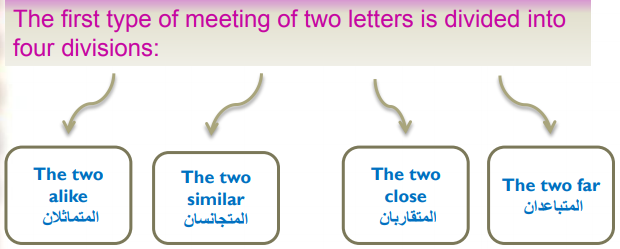
  • There are four possible different categories that the two meeting letters can fall under, These categories will be discussed further bi-idhnillah .

The meeting of two letters is of three different ways:

  1. Meeting of the two in pronunciation and writing, in that there is no separation between them, such as the two “ب baaوَلَا يَغْتَب بَّعْضُكُم  Such as the two   laam    هل لكم
  2. Meeting of the two in writing only, such as in:  (سَمِيعٌ عَلِيمٌ  –  إِنَّهُ هُوَ )  here the two haaare next to each other but maddas-silahprevents them from being pronounced together by the way we read (Hafs An Aassim).
  3. – Meeting of the two in pronunciation only in as:  أَنَا النَّذِيرُ  In this case the alif separates the two noon from each other, but since the alif is not pronounced, the two noon meet in pronunciation.

learn quran free

Start Free Trial

The first type is what will be discussed , the second and third type do not enter this section or do not
apply to the way we read.
When discussing the relationship of two letters that meet, it does not matter whether they meet in one
word or are in two different words, and the letters meet each other by one being at the end of a word and the other at the beginning of the next word.
Tajweed Advanced Course 234


It will be continue

Similar Posts

  • |

    Tuhfat Al Atfal Matn part 11 – Conclusion of the Tuḥfah

    Conclusion of the Tuḥfah   خاتمة التحفة See:-> Part-1 Part-2 Part-3 Part-4 Part-5 Part-6 Part-7 Part-8 Part-9 Part-10 خاتمة التحفة وَتَمَّ ذَا النَّظمُ بِحَمْـــــد الله               عَلَي تَمَامه بِـلا تَنَــاهِــــي أَبْيَاتُهُ نَــدٌّ بدَاَ لِذِي النَّهَـــي              تَارِيخُهَا بـُشْريَ لِمَنْ يُتْقِنُـــهَا ثُمَّ الصَّــلاةُ والسَّـــلامُ أَبَدَا              عَلَي خِتَـامِ الأَنْبيَاء أَحْمَــــدَاَ واَلآلِ والصَّــــحْبِ وَكلُ تَابِعِ              وَكُلَّ قَـارئٍ وكُلَّ سَامِـــــعِ   TEXT:…

  • |

    The Connecting Hamzah (Hamzah Alwasl)part2

    The Connecting Hamzah (Hamzah Alwasl) Part2     همزة الوصل الجزء الثانى Part 1  Part3  part4 You can find (hamzaut wasl) on: 1-Verbs الأفعال 2-Nouns الأسماء 3-Participles  الحروف The vowel of hamza-t alwasl when beginning with it in verbs: It is depend on the vowel on the third letter of the verb. Note that shaddah is…

  • |

    Tuhfat Al Atfal Matn part 8 -The Rulings of the Madd

    The Rulings of Madd    أحـــكــام الـــــمــد  See:-> Part-1 Part-2 Part-3 Part-4 Part-5 Part-6 Part-7 Part-9 Part-10 Part-11 أحكام المد لِلْمَــدَّ أَحْكَـــامٌ ثَلاثَةٌ تَـدُومْ               وَهْيَ الوُجُوبُ وَالجـوَازُ وَاللُّزُومْ فَـوَاجبٌ إِنْ جَاءَ همــزٌ بَعْدَ مَدّ               فِي كِلْمَة وَذَا بِمُتَّصِـــلْ يـُعَدَّ وَجَـائزٌ مَـــدٌ وَقَصَرٌ إِنْ فُصِلْ               كُـلٌّ بِكِلْمَةٍ وهَذَا المنْفَصِـــلْ ومـثلُ ذَا إن عَــرضَ السُّكُونُ                وَقْفـاً كَتَعْلَمُونَ نَستْعَيِــــنُ…

  • |

    THE MUDOOD (LENGTHENINGS) PART 2

    Tajweed Course for beginner Part-16 THE MUDOOD (LENGTHENINGS) PART 2     أحكام المدود الجزء الثانى Read Part-1  Part3   Part4  Part5 Madd Causes. 1-Madd Caused by Hamza 2-Madd caused / followed by a sukoon or shaddah. All Courses 2-The Exchange Lengthening  ( (Madd Al-Badal )  مــــد البـــدل Madd Al-Badal can simply be defined as (every…

  • |

    Al waqf and Ibtida Part4

    Al waqf and Ibtida Part4    الوقف والأبتداء الجزء الرابع  Read: Part1  Part2  part3 The Beginning (Al-Ibtidaa)  الابتداء In the knowledge of scholars of recitation, is referring to recitation after cutting off recitation or stopping. The beginning is only by choice, in contrast to the stop, which may be by choice or compulsion. For that…

Leave a Reply

Your email address will not be published. Required fields are marked *