

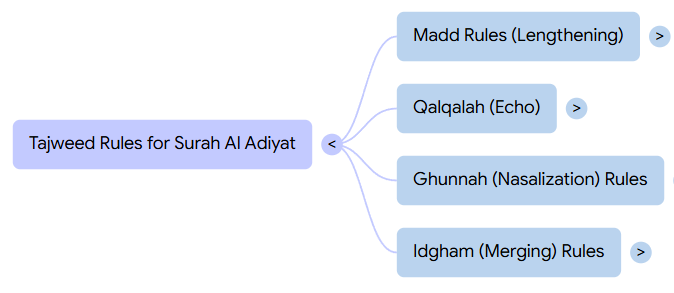
Explanation of Surah Al Adiyat :
وَٱلۡعَٰدِيَٰتِ : There are Two Small Alif , like big Alif should ( Madd ) length it Two Vowel counts ( Two Haraks ) .
ضَبۡحٗا : Qalqalah in (ب) , There are five Qalqalah Letters ( ق – ط- ب- -ج – د ) .
– The Alif in the end has Madd Al-Ewadh (The Substitute Lengthening) – length two Vowels counts ( Two Haraks )
فَٱلۡمُغِيرَٰتِ – فَٱلۡمُورِيَٰتِ : The Woow and Ya’a are Madd letters – length two Vowels counts and small Ali as well.
صُبۡحٗا – قَدۡحٗا : Qalqalah in (د) and (ب).
بِهِۦ جَمۡعًا – بِهِۦ نَقۡعٗا : Madd Selah Saghrah two Haraks because (ــه) Ha Salah is not followed by Hamzah. like ( هو ) .
فَوَسَطۡنَ : Qalqalah in (ط)
Understanding the nuances of the ‘Qalqalah‘ letters is crucial for beautiful recitation. In our structured Tajweed course, we break down each letter with live examples and personalized feedback from qualified instructors. Ready to perfect your recitation? Explore our Tajweed courses here:
See our Courses
إِنَّ : Noon Mushddad With Ghunnah length it two vowels counts.
ٱلۡإِنسَٰنَ : It is IKhfaa Haqeqe For Noon Sakinah ( ن ) or Tanween , There are 15 letters for Ikhfaa and س one of these letters, In Ikhfaa Noon Sakinah or Tanween not pronounced MAkhraj , only Gunnah is promounced.
لِرَبِّهِۦ لَكَنُودٞ: Madd Selah Saghrah two Haraks because (ــه) Ha Salah is not followed by Hamzah. like ( هو ) .
وَإِنَّهُۥ عَلَىٰ – وَإِنَّهُۥ لِحُبِّ: Madd Selah Saghrah two Vowels .
لَشَهِيدٞ – لَشَدِيدٌ : When stop on (د) Make it Sakinah therefore Qalqalah (Echo ) should be applied – the quick movement of the tongue or lips upon articulation.
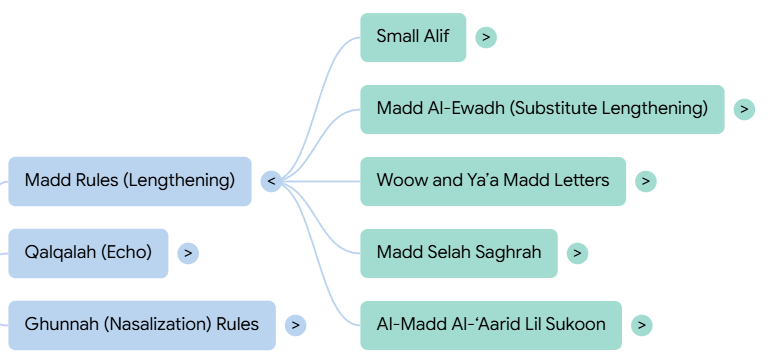
ٱلۡقُبُورِ – ٱلصُّدُورِ : To Stopping on the word (ٱلۡقُبُورِ ) stop by sukoon on (ر) so The (و) letter is Al-Madd Al-‘Aarid Lil Sukoon (Presented Sukoon ) : The reciter must stop after the word being recited in order to sound this madd 2, 4 or 6 counts .
رَبَّهُم بِهِمۡ : Meem is Followed by Ba’a -The rule will be Ikhfa’a Shafawe , Two Vowles With Ghunnah and pronounce Meem and Baa together as one syllable
يَوۡمَئِذٖ لَّخَبِيرُۢ : Tanween (Two Kasras ) is followed by ( ل) Idgham without Ghunnah – Insert Tanween into Laam without Gunnah.

📚 Did you find this article helpful? This is just the beginning.
Imagine having a qualified teacher to guide you, answer your specific questions, and provide a structured path to mastering the Quran.
- At QuranMyWay Academy, we move beyond articles to offer:
- Live, Interactive Classes with certified teachers.
- Personalized Learning Plans tailored to your age and level.
- A Supportive Community of fellow students on the same journey.
- Direct Feedback on your recitation and understanding.
- Don’t just read about Islam; live it and understand it deeply.
Start A Free Trial
Quiz
Answer Key
Surah Al Adiyat Translation ( Tafseer ) :
وَٱلۡعَٰدِيَٰتِ ضَبۡحٗا By the races, panting,
فَٱلۡمُورِيَٰتِ قَدۡحٗا And the producers of sparks [when] striking
فَٱلۡمُغِيرَٰتِ صُبۡحٗا And the charges at dawn,
فَأَثَرۡنَ بِهِۦ نَقۡعٗا Stirring up thereby [clouds of] dust,
فَوَسَطۡنَ بِهِۦ جَمۡعًا Arriving thereby in the center, collectively,
إِنَّ ٱلۡإِنسَٰنَ لِرَبِّهِۦ لَكَنُودٞ Indeed mankind, to his Lord, is ungrateful.
وَإِنَّهُۥ عَلَىٰ ذَٰلِكَ لَشَهِيدٞ And indeed, he is to that a witness.
وَإِنَّهُۥ لِحُبِّ ٱلۡخَيۡرِ لَشَدِيدٌ And indeed he is, in love if wealth, intense.
أَفَلَا يَعۡلَمُ إِذَا بُعۡثِرَ مَا فِي ٱلۡقُبُورِ But doe he not know that when the contents of the graves are scattered.
وَحُصِّلَ مَا فِي ٱلصُّدُورِ And that within the breasts is obtained,
إِنَّ رَبَّهُم بِهِمۡ يَوۡمَئِذٖ لَّخَبِيرُۢ Indeed, their Lord with them, that Day, is [fully] Acquainted.



Tajveed (also spelled Tajweed) is the set of rules for correctly pronouncing the words of the Qur’an. It ensures that each letter is articulated from its proper place (makhraj) with the correct characteristics, like lengthening (madd), pauses, and emphasis. The purpose of Tajveed is to preserve the original pronunciation as revealed to the Prophet Muhammad ﷺ, allowing for clear, respectful, and accurate recitation. quran tutor AI is the best App for tajveed learning https://www.qurantutor.ai/