Learn Surah Al Fatiha with Tajweed

Learn Surah Al Fatiha with Tajweed

Surah Al Fatiha with Tajweed 1

Explanation of Surah Al Fatiha :

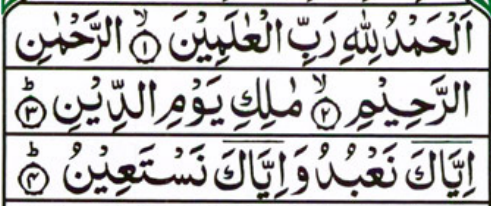
الْحَمْدُ : The Laam is Qamariyya , It means Pronounce it clearly .

لِلَّهِ : Laam Alah is light (Muraqaq) Laam.

الْعَالَمِينَ : When stopping on (ى ) by presented Sukoon , You can length Yaa ( 2, 4 or 6 )  vowels counts , it’s optional you can choose any number of Harakahs .

Remember:

if you choose 2 vowels counts make all of presented Sukoon  2 vowels counts.

الرَّحْمَٰنِ : The Laam here is called (Laam Shamsiyya ), It means  don’t pronounce it, in other words Insert this Laam into next letter so that you will note Shaddah on next Letter.

  • And small Aleph (أ) like big Alif two vowel counts , Madd Tapyyia (Natural Madd) ( 2 ) Haraks

الرَّحِيمِ : Laam Shamsiyya , don’t pronounce it.

  • (ى ) by presented Sukoon , You can length Yaa ( 2, 4 or 6 )  vowels.

مَالِكِ : Small Alif like Big one Alif Madd length  it Two Vowel counts, Madd Tapyyia  Two Haraks.

يَوْمِ الدِّينِ : Drop Pronounce ال  together because:

1- Hamzat Al wasl .

2- The Laam Laam Shamsiyya .

Understanding the nuances of the ‘Surah Al Fatiha’ is crucial for beautiful recitation. In our structured Tajweed course, we break down each letter with live examples and personalized feedback from qualified instructors. Ready to perfect your recitation? Explore our Tajweed courses here:

Browse courses    Book Free trial
Surah Al Faiha

إِيَّاكَ : The (ى) has Shaddah Make Sure that  press on (ى) , And Alif Madd Two Vowel Counts .

اهْدِنَا : The (هـ) has Hams and Rakhawa Sifats , It means More Air in Ha’a (هــ) .

اهْدِنَا الصِّرَاطَ : Drop three letters ( أ – ا – ل ) .

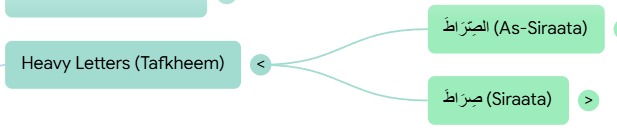
الصِّرَاطَ : Letters ( صـ  and طـ ) Heavy letters,  Tafkheem rule, it’s meaning creating more space between the roof of the mouth and the bottom of the mouth.

صِرَاطَ : The same rules Make it heavy or Mufakham , High level of Tafkheem because Cares Fatiha on both of them  The ( ر ) Mufakham  as well .

Book Free Trial & Start your journey of Quran, Arabic, and Islam e-Learning today

الَّذِينَ : Letter (ذ) Make a tip of Tongue touch The tip of front teeth,  Like (Th) English letter, There are Letters in Arabic should Pronounced like that      ث – ظ- ذ .

أَنْعَمْتَ: Noon has Ithhar rule,,  means  pronoun Noon letter Clearly.

الْمَغْضُوبِ : Don’t mix between م and  ض   

  • Remember Meem Always Light or has Tarqiq  but  Da’d Heavy or Tafkheem rule.

الضَّالِّينَ : The (ض) So heavy.

And Alif (ا) Madd Lazem Kalimy Muthaql  , Must length Alif Six vowels counts.

The best Quran teachers

⇒ Get A Quran Classes with a reasonable price ⇐
Surah Al Fatiha with Tajweed 2

Surat Al Fatiha translation ( Tafseer ) :

In the name of Allah, the Gracious, the Merciful        (بِسْمِ اللَّهِ الرَّحْمَٰنِ الرَّحِيمِ( ١

   Praise be to Allah, Lord of the Worlds.                              (الْحَمْدُ لِلَّهِ رَبِّ الْعَالَمِينَ ( ٢ 

  The Most Gracious, the Most Merciful.                     (3) الرَّحْمَٰنِ الرَّحِيمِ

Master of the Day of Judgment.                                     (4) مَالِكِ يَوْمِ الدِّينِ

It is You we worship, and upon You we call for help.        (5) إِيَّاكَ نَعْبُدُ وَإِيَّاكَ نَسْتَعِينُ

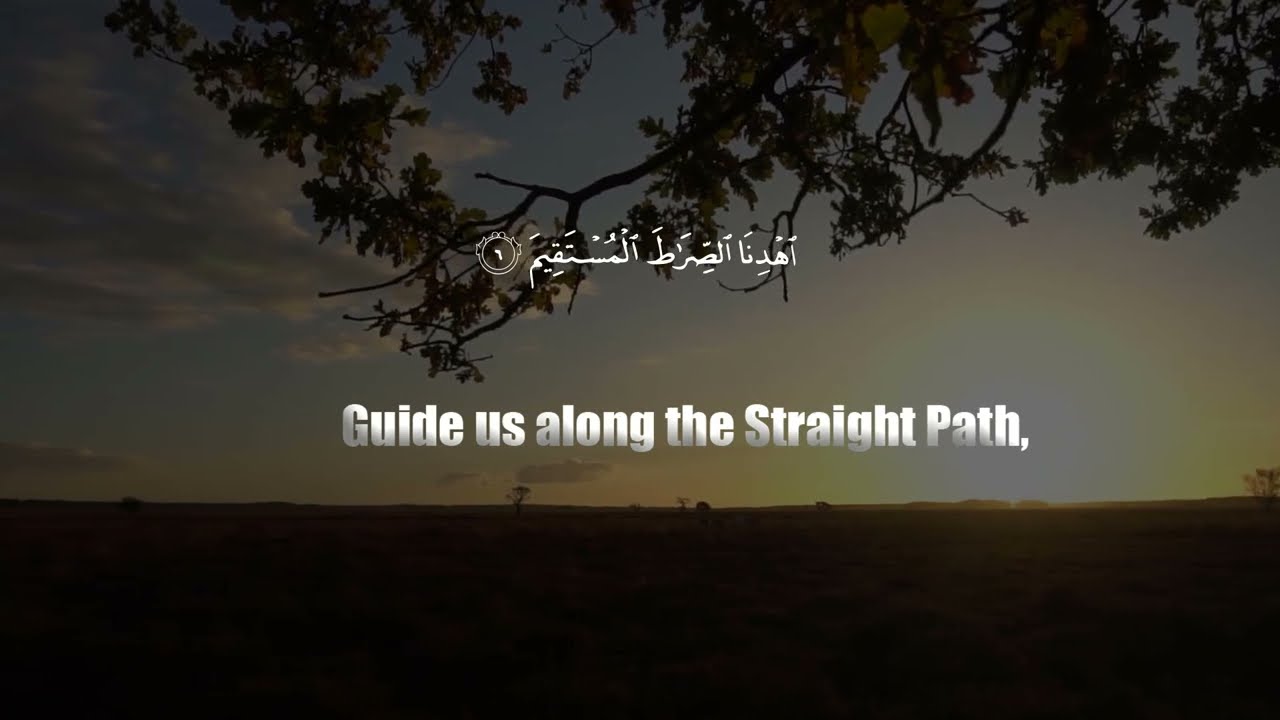
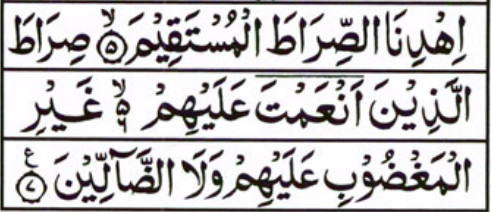
Guide us to the straight path.                                                  ا(هْدِنَا الصِّرَاطَ  الْمُسْتَقِيمَ ﴿ 6

 صِرَاطَ الَّذِينَ أَنْعَمْتَ عَلَيْهِمْ غَيْرِ الْمَغْضُوبِ عَلَيْهِمْ وَلَا الضَّالِّينَ  (7)

The path of those You have blessed, not of those against whom there is anger, nor of those who are misguided.


⇒Learn Surah Al Ikhlas with Tajweed Rules

⇒ Surat Masd With Tajweed Rules.

Supplication and Surah Al-Fatihah

Supplication and Surah Al-Fatihah

Supplication, or dua in Arabic, refers to the act of making a request or expressing a desire to Allah (God) in prayer. It is an important aspect of worship in Islam, and Muslims are encouraged to supplicate to Allah for their needs, both in this world and the hereafter.

Surah Al-Fatihah includes the Etiquettes and conditions of supplication:

1-Devotion to Allah Almighty

There is no mediator between the servant and his Lord in supplication, but it is from the servant directly to Allah Almighty because Allah Almighty is near and responds to the invocation of the supplicant when he calls upon Him as Allah the Almighty said:

‘When My servants ask you ‘O Prophet’ about Me: I am truly nearby. I respond to one’s prayer when they call upon Me. So let them respond ‘with obedience’ to Me and believe in Me, perhaps they will be guided ‘to the Right Way.

Follow up to the Messenger of Allah (peace and blessings be upon Him) by making dua’ with the legal supplications that came in the Qur’an and the Sunnah, and every path to Paradise is blocked except for the path of the Noble Messenger (PBUH).

The supplication of a servant continues to be granted as long as he does not supplicate for a sinful thing or for something that would cut off the ties of kinship and he does not grow impatient.

WE offer free three classess

2- Make your request definite and be assured of being answered

He reported Allah’s Messenger as saying, “When one of you makes supplication he must not say, ‘O Allah, forgive me if You want, show mercy to me if You want, provide for me if You want, but must make his request definite, for He does what He wills and there is no one to impose compulsion on Him.” Bukhari transmitted it.

3- Presence of the heart and not being neglectful when supplicating

Supplicate Allah Almighty when you are assured of being answered and Allah Almighty doesn’t answer the supplication from a careless and inattentive heart.

And we will learn from Surah Al-Fatihah the etiquette of supplication by starting to praise Allah as in His saying (All praise is to Allah, Lord of the Worlds) (The Most Compassionate, Most Merciful) (Master of the Day of Judgment) and then supplicate in His saying (Guide us along the Straight Path).

learn quran free

Get Trial Class

4-The invocation to Allah Almighty, the Blessed and Exalted

We should supplicate Allah the Almighty by legitimate means with His Names and Attributes, and with good deeds, faith, and your worship of Allah the Almighty.

5-The invocation to Allah Almighty with the living righteous people who are present

By saying to a man in front of you that you think he is among the people of goodness and righteousness, to say to him: “Supplicate Allah for us” or “Supplicate Allah Almighty for me and the Muslims.”

6- Supplicating with words that are concise but comprehensive in meaning

Muslim supplicate to Allah the Almighty in each prayer during reciting Surah Al-Fatihah, saying: (Guide us along the Straight Path).

Hello in Arabic

7- The supplicant combines fear and hope in his supplication.

Fear without hope means despair, and no one loses hope in Allah’s mercy except those with no faith.

8- Purity and performing ablution before making a supplication ‘ dua’ ’

It is not a condition, but rather it is complete etiquette before making a supplication.

Overall, supplication and recitation of Surah Al-Fatihah are both important aspects of Islamic worship, and they are considered to be a means of strengthening one’s relationship with Allah.

Surah Al-Fatihah and the Straight Path

Surah-Fatiha4.

Surah Al-Fatihah is a chapter in the Quran, the holy book of Islam, and it is considered to be the most important surah in the Quran. The surah is recited in the daily prayers of Muslims and is also recited on other occasions, such as during funerals and other religious ceremonies.

1-Guidance to the straight path

– Allah sends astray whom He wills and guides whom He wills. For those who believe in Allah and hold fast to Him, Allah will guide them to the straight path.

So, we must ask Allah Almighty to give us the straight path because the straight path is the path of Jannah.

The Prophet (PBUH) was carrying the earth on the day of Al-Khandaq till his `Abdomen was fully covered with dust, and he was saying, “By Allah, without Allah we would not have been guided, neither would we have given in charity, nor would we have prayed.

So (O Allah), please send Sakina upon us, and make our feet firm if we meet the enemy as the enemy has rebelled against us, and if they intended affliction, (i.e. want to frighten us and fight against us then we would not flee but withstand them).” The Prophet (PBUH) used to raise his voice saying, “Abaina! Abaina! .

Learn Quran in our academy and get a free trial

2- The meaning of the straight path:

The call to righteous action in the life of this world. The straight path is the path which Allah has summoned us to, and that is the Sunnah of the Prophet (PBUH).

Satan wants to take them from the path of truth and guidance to the path of error. Satan promises them and arouses desire in them, but Satan doesn’t promise them except delusion.

Surah Al-Fatihah and Conditions Acceptability of Deeds
Surah Fatiha Names

3- Obstacles of guidance to the straight path:

  1. Shirk (i.e worship of anyone or anything besides Allah) Associating others with Allah: we do not supplicate anyone but Allah, we do not seek help, we do not rely upon, we do not ask for help, and help except for Allah the Mighty and Sublime.
  2. The obstacle to heresy.
  3.  The obstacle of disobedience.

Every Muslim should beware of these obstacles.

– Finally,

  • Who are the people of the straight path:
  •  In His saying: “You have blessed them” means that we would not have been guided without Allah Almighty. So, the servant would be blessed with two things: knowing the truth and acting upon it (Beneficial knowledge and good deeds).
  • As for His saying “not those you are displeased with, or those who are astray” means that he who has knowledge that he does not act upon, so his deeds are not accepted.
  • The misguided is acting deeds but without knowledge, all of its actions are misguidance and heresy.
  • The servant must feel his need to Allah and ask for a straight path.
  • One of the greatest blessings is that Allah guides you to the straight path and makes you firm on the path.

learn quran free

Get Trial Class

Overall, Surah Al-Fatihah is a powerful prayer that encapsulates many of the key themes and principles of Islam, including guidance, gratitude, and reliance on Allah.


Put any question in comment:
Our Blog
Our Courses

Surah Al-Fatihah and Conditions Acceptability of Deeds

Surah Fatiha 2

Surah Al-Fatihah contains two conditions acceptability of deeds:

The first: is the sincerity of the intention to Allah Almighty: that is the intention of the servant must be with all his words and actions outward and inward, to seek the pleasure of Allah Almighty only. Actions are to be judged only by intentions and a man will have only what he intended.

The intention is a great matter. It is the spirit of deeds. It is a very important deed before doing anything for Allah the Almighty. Actions are counted with intention, and they are not counted if they are without good intention. 

The second: agreeing with the Sharia that Allah Almighty commanded to follow, and that is by following the Prophet (PBUH) in what he came with, not violating him, and not creating a new form of worship, but the servant must follow the Sunnah of the Prophet, peace, and blessings be upon Him.

Surah Fatiha Names

Surah Al-Fatihah and the Straight Path

The servant must get rid of polytheism, and the deed is not righteous unless it is in accordance with the Sunnah of the Prophet (blessings and peace be upon Him).

And sincerity is that the deed for Allah is only intended by Allah Almighty.

Learn Surah Al-Fatihah 3$

It was narrated that Abu Sa’eed said:

“The Messenger of Allah (PBUH) came out to us when we were discussing Dajjal (False Christ) and said: ‘Shall I not tell you of that which I fear more for you than Dajjal?’ We said: ‘Yes.’ He said: ‘Hidden polytheism when a man stands to pray and makes it look good because he sees a man looking at him.” Sunan Ibn Majah.

Surah Al-Fatihah

As for deliverance from this polytheism, it can be summed up in the following:

1- A lot of supplications, which the Prophet (blessings and peace be upon Him) taught his companions to say in order to avoid this polytheism.

2- That the servant feels the ugliness of polytheism, no matter how small.

3- To feel that it frustrates the deed that he mixes with or reduces its reward.

4- That the hypocrite knows by his worship or service to people that whenever they know that he wants to praise them, and so on, he will fall from their eyes, and perhaps they will despise him, and become worthless among them. So Hidden polytheism enters the heart of the servant and then is a hypocrite and all deeds are not for the sake of Allah the Almighty.

On the authority of the mother of the faithful, Aisha (May Allah be pleased with him), who said:

The Messenger of Allah (PBUH) said, “He who innovates something in this matter of ours (i.e., Islam) that is not of it will have it rejected (by Allah).”

Put any question in comment
Our Blog
Our Courses