Al Waqf And Ibtidaa part 4

The stop and the start (Al-Waqf wa Al-Ibtidaa’) part 4

The stop and the start (Al-Waqf wa Al-Ibtidaa’) part-4      الوقف  والابتداء الجزء الرابع

See: Part 1  Part 2  part3

Al-Ibtidaa’ (The start).

Introduction:

In the knowledge of scholars of Quran recitation, is referring to recitation after cutting off recitation or stopping.
The beginning is only by choice, in contrast to the stop, which may be by choice or compulsion. For that reason it is demanded of the reader when beginning, that he start his recitation with an independent phrase that conveys the intended meaning,  not attached to that which precedes it grammatically.

There are two types of Ibtidaa    ابتداء :

1-Ibtidaa Haqiqi :when the recitation is initiated a-new     أبتداء حقيقي

2- Ibtidaa Taqdeeri : to continue the recitation after a pause. Similarly, completing one Surat and starting the next too will be    أبتداء  تقديرى او أضافى The beginning that is not allowed

We are Quran academy , have Qualified teachers, Book free trial class now , Here.

Therefore Alibtidaa الابتداء divide as Alwaqf   الوقف

1-The allowed Ibtidaa (الابتداء الجائز)

2- The Ibtidaa that is not allowed  (الابتداء الغير جائز)

1-The allowed Ibtidaa (الابتداء الجائز)

1-Complete Ibtidaa ( الابتداء التام) 

a-Any start of a surah
B- the start after a complete stop Examples : start with ayah no. 6 in Surat Al-Baqarah  إِنَّ الَّذِينَ كَفَرُوا سَوَاءٌ     not attached to the previous ayah.Complete Ibtidaa ( الابتداء التام) 

2-Sufficient Ibtidaa ( الابتداء الكافى) 

Example :start with ayah no.7 in ٍSurat Al-Baqarah  خَتَمَ اللَّهُ عَلَىٰ قُلُوبِهِمْ وَعَلَىٰ سَمْعِهِمْ  Attached to the previous ayah in meaning.Sufficient Ibtidaa ( الابتداء الكافى) 

3-Good  Ibtidaa ( الابتداء الحسن) 

Example:Good Ibtidaa

And indeed, you pass by them in the morning – The two ayat attached grammatically and in meaning.

Al-Waqf wa Al-IbtidaaStart Free Trial

2- The Ibtidaa that is not allowed  (الابتداء الغير جائز)

The undesired, detested Ibtidaa (أبتداء قبيح)

repulsive beginning would be when starting with a word that leads to a meaning other than that Allah, The Exalted, wants, or a meaning that is in disagreement with our creed.detested Ibtidaa(أبتداء قبيح

More Examples:

  • – Start with   اتَّخَذَ الرَّحْمَنُ وَلَدًا    (88)

“Allah has taken a son.” (Astaghfirullah) Without saying first “They say”  وَقَالُوا 

  • In surat Al-Ma‟idah aya 64

Start with          يَدُ اللَّهِ مَغْلُولَةٌ           The hand of Allah is chained.

Without saying           وَقَالَتِ الْيَهُودُ      And the Jews say


Will continue ….
See: Part 1  Part 2  part3

Put any question in comment
Our Blog
Our Courses

Al Waqf And Ibtidaa part 3

Al waqf and Ibtidaa Part3

The stop and the start (Al-Waqf wa Al-Ibtidaa’) part-3     الوقف  والابتداء الجزء الثالث

See: Part 1 Part 2 part 4

The Optional Stop (الوقف الاختيارى)

The optional stop is divided into four categories:

1-The inclusive, complete waqf  (وقف تام)

2-The sufficient, permissible waqf (وقف كافى)

3-The reliable, accepted waqf  (وقف حسن)

4-The undesired, detested waqf (وقف  قبيح)

3-The reliable, accepted waqf  (وقف حسن)

The accepted, permissible waqf is that which is made on such a place where there is a connection between the sentences, before and after, both in word and meaning. However there is no corruption in the meaning.

Just as the other stops. It is called “hasan” or good due to the fact that stopping on it leads to understanding of a meaning.

⇒ The rule for the good stop: it is allowed to stop on it, but not allowed to start on what follows it due to its attachment to what follows grammatically and in meaning, except on the end of an Ayah. Stopping on the end of an Ayah is Sunnah.⇐

Examples;

The reliable, accepted waqf

  • Examples;

-You can stop on the word هللا as the meaning in itself is fully understood

In the name of Allah –  بِسْمِ اللَّـهِ

The Entirely Merciful, the Especially Merciful. – الرَّحْمَـٰنِ الرَّحِيمِ

-But you cant start with what comes next due to its attachment to what follows grammatically and in meaning .

We are Quran academy , have Qualified teachers, Book free trial class now , Here.

4-The undesired, detested waqf (وقف  قبيح)

It is the stop on what does not give a correct meaning, and that is due to its strong attachment to what follows in grammar, and in meaning.

⇒ The rule for the repulsive stop: This stop not allowed intentionally. It is only allowed when compelled in such as a situation as unexpected shortness of breath, sneezing, or forgetting ⇐

After the state that compelled the stop has past, the reader then must repeat one, two, or more  words, as necessary to convey the correct and sound meaning.

  • Examples;

Stopping on       بِسْمِ          From        بِسْمِ اللَّـهِ

Stopping on      الْحَمْدُ     From      الْحَمْدُ لِلَّه

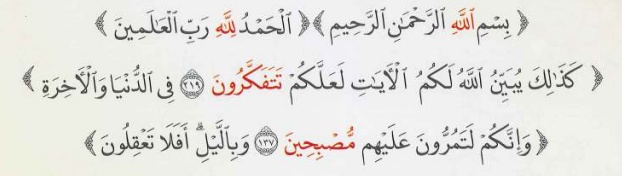
إِنَّمَا يَسْتَجِيبُ الَّذِينَ يَسْمَعُونَ وَالْمَوْتَى يَبْعَثُهُمُ اللَّهُ

Stopping on    وَالْمَوْتَى       Only those can accept who hear as for the dead . (6:36)

  • More Examples;

The undesired, detested waqf

Al-Waqf wa Al-IbtidaaStart Free Trial

  • Do not stop on a verb without its subject (the doer of the verb).
  • Do not stop on a subject of a verb without the object of the verb.
  • Do not stop on a preposition without the object of the preposition.
  • Do not stop on a possessive noun ( possessed ) without the possession expression ( the possessor ) / two nouns the second is the possessive of the first noun.
  • Do not stop on the subject of the nominal sentence without the predicate – a nominal sentence in Arabic has no verb.
  • Do not stop on a word with is characterized without that which characterizes it.
  • Do not stop on a conjunction without its conjoined noun.
  • Do not stop on a noun which is in a state ( or case) without the word which gives the state (accusative).
  • So not stop on a number ( count) without that which is being counted.
  • And don’t stop on an emphasized noun without the emphatic term.

The stop signs on words in the Madinah printing of the Quran.The stop signs on words

Very important note:

-There is no Waqf(stoppage) in the Quran that is obligatory or Forbidden Islamically except that which distorts the meaning  .


Will continue ….
See: Part 1  Part 2 part 4

Put any question in comment
Our Blog
Our Courses
Al Waqf And Ibtidaa part 2

Al Waqf And Ibtidaa part 2

The stop and the start (Al-Waqf wa Al-Ibtidaa’) part-2     الوقف  والابتداء الجزء الثانى

See: Part 1  Part 3  part 4

The Optional Stop (الوقف الاختيارى)

The optional stop is divided into four categories:

1-The inclusive, complete waqf  (وقف تام)

2-The sufficient, permissible waqf (وقف كافى)

3-The reliable, accepted waqf  (وقف حسن)

4-The undesired, detested waqf (وقف  قبيح)

1-The inclusive, complete waqf  (وقف تام)

There is no connection either in word or meaning between the sentence before with the one appearing after it.

or It is the stop on a Qur’anic word complete in meaning and not attached to what follows it in grammatical expression or in meaning.

This waqf is generally made at the end of an Ayat, narratives, and incidences.

⇒ The rule for the complete stop: It is best to stop on the word that is a completestop, and then start on what follows it ⇐

Examples;

To make waqf on (5 وَأُوْلَئِكَ هُمُ الْمُفْلِحُونَ [سورة البقرة  in Surah Baqarah, Those are upon [right] guidance from their Lord, and it is those who are the successful

Then start

إِنَّ الَّذِينَ كَفَرُوا سَوَاءٌ عَلَيْهِمْ أَأَنذَرْتَهُمْ أَمْ لَمْ تُنذِرْهُمْ لَا يُؤْمِنُونَ (6) – Indeed, those who disbelieve – it is all the same for them whether you warn them or do not warn them – they will not believe.

  • Examples:

وَهُوَ بِكُلِّ شَيْءٍ عَلِيمٌ (29)  وَإِذْ قَالَ رَبُّكَ لِلْمَلَائِكَةِ إِنِّي جَاعِلٌ فِي الْأَرْضِ خَلِيفَةً

Alwaqif examples

We are Quran academy , have Qualified teachers, Book free trial class now , Here.

  • The compulsory (required) stop
    Known in the Mushaf by the small Meem sign مـ ,shows that there is a must to stop , not stopping on this word could change the intended meaning of Allahs words.

Al waqif examples

Meaning:

Only those can accept who hear. As for the dead, Allah will raise them up; then unto Him they will be returned .

Al-Waqf wa Al-IbtidaaStart Free Trial

2-The sufficient, permissible waqf (وقف كافى)

The sufficient waqf is that waqf in which there is connection between the previous ayat with the one appearing after it in meaning only and not in word – but not in grammar .

This waqf generally takes place on ayat’s and symbols of waqf.

⇒ Its rule: It is advisable to stop on it and start with that which follows, just as in the complete stop ⇐

  • Examples:

stop on    –   (6) إِنَّ الَّذِينَ كَفَرُوا سَوَاءٌ عَلَيْهِمْ أَأَنْذَرْتَهُمْ أَمْ لَمْ تُنْذِرْهُمْ لا يُؤْمِنُونَ

Indeed, those who disbelieve – it is all the same for them whether you warn them or do not warn them – they will not believe.

Then start    –   خَتَمَ اللَّهُ عَلَىٰ قُلُوبِهِمْ وَعَلَىٰ سَمْعِهِمْ ۖ وَعَلَىٰ أَبْصَارِهِمْ غِشَاوَةٌ ۖ وَلَهُمْ عَذَابٌ عَظِيمٌ (7)

  • Examples:

stop on    –      فِي قُلُوبِهِم مَّرَضٌ فَزَادَهُمُ اللَّهُ مَرَضًا

In their hearts is disease, so Allah has increased their disease;

Then start    –     وَلَهُمْ عَذَابٌ أَلِيمٌ بِمَا كَانُوا يَكْذِبُونَ (10)

And for them is a painful punishment because they [habitually] used to lie.


Will continue ….
See: Part 1  Part 3  part 4

Put any question in comment
Our Blog
Our Courses

THE MUDOOD (LENGTHENINGS) PART 2

THE MUDOOD (LENGTHENINGS) part 2PART 1

Tajweed Course for beginner Part-16

THE MUDOOD (LENGTHENINGS) PART 2     أحكام المدود الجزء الثانى

Read Part-1  Part3   Part4  Part5

Madd Causes.

1-Madd Caused by Hamza

2-Madd caused / followed by a sukoon or shaddah.

THE MUDOOD (LENGTHENINGS) PART 2
All Courses

2-The Exchange Lengthening  ( (Madd Al-Badal )  مــــد البـــدل

Madd Al-Badal can simply be defined as (every Hamza preceding a Madd letter).
Madd Al-Badal, if not followed by a Saakin letter or Hamzah, is prolonged only 2 beats.

Madd Al-Badal

What is that mean ?

As seen these words originally had two hamzahs, the first one had a vowel and the second a sukoon. The second hamzah was changed into a madd letter from the category of the vowel of the first hamzah (for example if the first hamzah has kasra then the second hamzah changed to yaa).

⇒ Free Helping in Quran And Tajweed ⇐

For More Explanations:

Substitute Lengthening (Madd Badal) ( البدل مد ( occurs when the hamzah precedes a letter of lengthening provided that the letter of lengthening is not followed by a hamzah or a sukoon in the word.

It is so called because the letter of lengthening is mostly a substitute of the hamzah. Originally substitution results from the convergence of two hamzahs in one word, the first is a vowel and the second non-vowelled. So the second hamza is substituted by a letter of lengthening similar in nature to the first vowel by way of lightening. If the first hamzah carries a fataha (a) ( مفتوح آمنوا ,( which was originally ( ءأمنوا .

If the first hamzah carries a kasrah (i) maksur, then the second is substituted by a yaa such as ( إيمان ( which was originally ( إئمان.( If the first hamzah carries a dhammah (u) (madmum) then the second is substituted by a waaw, as ( أوتوا ( which originally was ( أؤتوا .( The rule here is: lengthening to two counts as in the case of normal lengthening.

learn quran free

Start Free Trial

3-The Substitute Lengthening (Madd ‘Ewadh )  مــــد العوض

Ewadh means: compensation. Madd ‘Ewadh is the replacement of a Tanween Fathah present at the end of a word while sopping at it, with an Alif Madd .

Madd ‘Ewadh is prolonged two beats.

Example:

The Substitute Lengthening (Madd Al-Ewadh


The lengthening is two counts, which means, the length of two vowels, the same as the counts of natural lengthening. This madd takes place whether there is an alif written after the letter with the tanween or not.
When continuing reading and not stopping on the word that has the tanween with a fat-h, this lengthening disappears, and the noon sakinah rules are applied to the tanween.

If there is an alif written after the tanween, it is dropped when continuing.

Except for Taa Marbuta “ ة .“ The Reader should stop on Taa Marbuta and pronounce it like Haa” هـ “ with Sukoon.

4-The lesser Connecting Lengthening Madd Assilah Assughra      مــد الصـلة الصغرى

It is a madd that comes from the vowel on a (pronoun or possessive pronoun haa (ــــه
A haa at the end of a word (last letter) that is not part of the original make up of the word, representing the singular third person male.

It is voweled either with a dhammah or a kasrah, positioned between two voweled letters, the reader is not stopping on it, and it is not followed by a hamzah. When all these requirements are met the dhammah on the haa become lengthened into a lengthened waw or the kasrah on the haa becomes lengthened like a lengthened yaa,

When stopping on this haa we stop with a regular sukoon, and the two count madd is dropped.

   مَا أَغْنَىٰ عَنْهُ مَالُهُ وَمَا كَسَبَ


Mistakes-in-tajweed-rulesmand

Al-ikhfaa-al-haqiqi
See All Course.

Lam sakinah rules

LAM SAKINAH RULES

Tajweed Course for beginner Part-12

Introduction Of Lam Sakinah rules     أحكامَ الام الساكنة

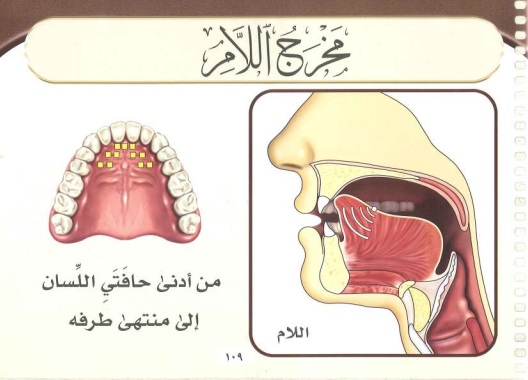
The articulation point of ( ل ) lam letter:

is from the nearest part of the sides of the tongue and the end of its tip, and what lies opposite to it of the gums of the first two upper premolars, the two upper canines, the two upper lateral incisors and the two upper front incisors.

All Courses
Lam sakinah rules

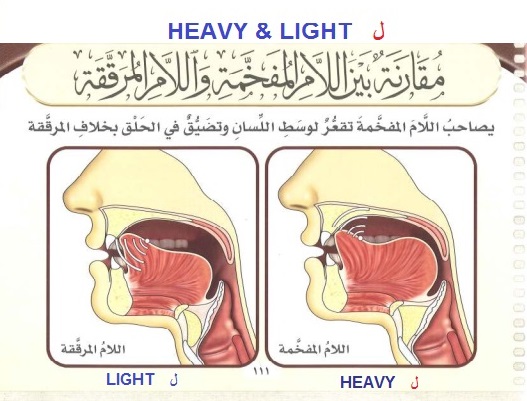
HEAVY & LIGHT    ( ل ) :

Lam sakinah rules

learn quran free

Get Trial Class

Rules for The Laam of The Exalted Name of Allah  ( الله )

This is one of the temporary Qualities
a) If there is a Fatha or a Dhamma before the word of Allah or Allahum, then laam in Allah will be heavy.

Examples:

 واللَّهُ  –  يَشَاءَ اللَّهُ  – سبحانَكَ اللهمَّ

b) If there is a kasrah before the word Allah, then the Laam in Allah or Allahum will be light.

Examples:

بالله  – دِينُ اللهِ –  لله  

c) If the reader starts reading with the name of Allah, then Laam in Allah or Allahom will be heavy.

Examples:

الله – اللهم


Lam sakinah rules

The Lam sakinah in the Quran are of five categories :

1- Lam of the definite article “The” .

2- The lam in a verb.

3- The lam in a noun .

4-  The lam of command .

5-  The lam in a participle.


Put any question in comment

See All Course.
Visit Our Website

Mistakes in tajweed Rules

Tajweed-Course-for-beginner-Part-2

Tajweed Course for beginner Part-2

Mistakes in Tajweed Rules:

The scholars have divided the types of mistakes one might fall into when reciting the Quran into two types:

1.Clear mistakes.   اللحن الجلى 

2.Unobvious (hidden) mistakes.   اللحن الخفى

The Clear mistakes must be avoided by all and to avoid them one must know the rules of Tajweed. If a person falls into the Clear Mistakes, this is considered a sin and Ibn Taymiyyah even regarded it undesirable for a Student of Knowledge  to pray behind a person who makes Clear Mistakes in their Salaah.

-These mistakes are Haram.

Examples :

Unobvious (Hidden) mistakes, then the ruling on them is lighter and the recitation of a person falling into this type of mistake is regarded as lacking in completeness and prayer behind such a person is sound.

A mistake that although does not change the meaning of Quranic words but the beauty of the words diminishes

Examples : -To overlook the rules of the thick / full mouth (tafkheem) letters and the thin / empty mouth. (tarqeeq) letters.
learn quran free

Start Free Trial

Helpful Tips towards learning Tajweed

  • You must find a Qur’an teacher who has studied Tajweed to listen to your recitation and correct you. Tajweed cannot merely be learnt from books, because the movements of your mouth as well as the sounds are important and only a teacher can correct you and make sure you are applying the rules correctly. Qur’an recitation is a science which was passed down generation by generation through teachers not just books, with a direct line to the Prophet pbuh.
  • Follow this book containing the rules of Tajweed and learn each rule little by little, applying it as you go along with the help of your teacher. Following the charts will make it even better to understand and remember the rules InshaaAllah.
  • Listen to Qur’an tapes of reciters who recite very clearly at a medium or slow speed and notice them applying the different rules of Tajweed. Repeat after them while trying to apply the rules you’ve learnt. Try to copy their
    tone and melody as well and see how it changes as the meaning of what they’re reciting changes.
  • Apply the rules you learn to the Surahs you have already memorized and don’t save any effort about reciting correctly. You might have to revise the surahs by looking back at them.
  • Practice and repetition will make perfect InshaaAllah: As Ibn al-Jazaree says in his poem about acquiring Tajweed: ‘And there is no obstacle between it (learning Tajweed) and leaving it, Except that a person must exercise his mouth with it.

See All Course.

What Is Tajweed Al Quran Rules

Tajweed-Course-for-beginner-Part-1

What Is Tajweed Al Quran Rules ?

Tajweed Al Quran Rules means ‘proficiency’ or ‘doing something well’.
When applied to the Quran, it means giving every letter of the Quran its rights and dues of characteristics when we recite the Quran and observing the rules that apply to those letters in different situations.

We give the letters their rights by observing the essential characteristics of each letter that never leave it. And we give them their dues by observing the characteristics of each letter that are present in them some of the time and not present at other times.

Take Your Attention :

– The Quran was revealed with Tajweed rules applied to it. In other words, when the angel Jibreel ((AS)) recited the words of Allah to the Prophet Muhammad (SAW) he recited them in a certain way and he showed the Prophet (SAW) the ways in which it was permissible to recite the Quran. So it is upon us to observe those rules so that we recite it in the way it was revealed.

History of Tajweed :

At the time of the Prophet (SAW) there was no need for people to study Tajweed because they talked with what is now known as Tajweed so it was natural for them. When the Arabs started mixing with the non-Arabs as Islam spread, mistakes in Qur’an recitation started appearing, so the scholars had to record the rules. Now, because the everyday Arabic that Arabs speak has changed so much from the Classical Arabic with which the Qur’an was
revealed, even Arabs have to study Tajweed.
learn quran free

Start Free Trial

The ruling of reading with Tajweed :

Muhammad bin Al-Jazaree the great Quran and Hadeeth scholar of the 9th Century (Hijri) says in his famous poem, detailing the rules of Tajweed: And applying Tajweed is an issue of absolute necessity, whoever doesn’t apply Tajweed to the Quran, then a sinner is he.

The purpose of  Tajweed :

The Quran is the word of Allah, and its every syllable is from Allah. Its recitation must be taken very seriously. The purpose of the Science of Tajweed in essence is to make the reciter proficient in reciting the Quran, observing the correct pronunciation of every letter with the rulings and characteristics which apply to each letter, without any exaggeration or deficiency.

The obligation of Tajweed :

The proofs that the scholars bring to show the obligation of Tajweed is that Allah says in the Quran,

أَوْ زِدْ عَلَيْهِ وَرَتِّلِ الْقُرْآنَ تَرْتِيلً

The meaning of which is: And recite the Qur’an (aloud) in a (slow and melodious) style (tarteela) 

  • Ali ibn Abi Talib (RA) said in the explanation of this Ayah: “at-Tarteel is Tajweed of the letters and knowing where to stop (correctly)”.[An-Nashr of Ibn Al-Jazaree 209:1].
  • And of the rights of reciting correctly is reciting it the way it was revealed. There are various Ahadeeth also showing us the importance of Tajweed. Umm Salamah was asked about the recitation of the Prophet (SAW) and she described it as a recitation ‘clearly distinguished letter by letter

See All Course.