
Makharij al Huruf ( ع – ح – خ )

Makharij al Huruf ( ع – ح – خ )

Why focus on these Letters ( ع – ح – خ ) ?

– Most of non Arabic speakers mix Between (ع – ء) , (ح – هـ) , (خ – غ ).

– Near of Makharij (the place of emitted of letter) or articulation point between (ع – ء) , (ح – هـ) , (خ – غ ) , We will see in this lesson .

– Some Languages don’t have sound of (ع – ح  – غ) , Therefore they cannot define the difference between ( ء – ه – خ) and them .

For these reasons and more it’s better to focus on these Letters t improve your recitation inshallah.

The Makharij  of (ع – ء) , (ح – هـ) , (خ – غ )
Makharij al Huruf-1235

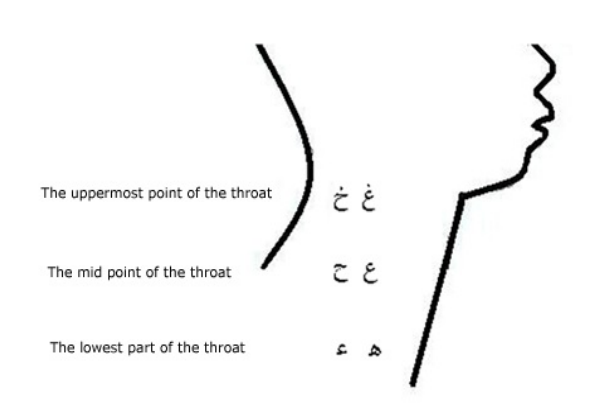
As you see in the Picture Al Halq  ( The throat )    الحلق

In the throat there are 3 Makhaarij and each one has 2 letters: َ

  1. Aqsal halq  (أقصى الحلق ) Deepest part of Throat – is pronounced (ءَ – هــ)
  2. Wasatal halq ( وسط الحلق ) Middle part of Throat – is pronounced ( ع – ح)
  3. Adnal halq  (أدنى الحلق ) closest part of Throat – is pronounced (  غ – خ )

Book Free Trial & Start your journey of Quran, Arabic, and Islam e-Learning today

Quran Courses

How can pronounce ( ع ) and ( ء )

Hamzah (ء) comes from deepest part of Throat but  Ain (ع) comes from Middle part of Throat .

Hear to this Audio :


Hear to these examples and try to pronounce all of it :

For Hamzah (ء) – ( فأس ، يأذن ، يأتي ، مأذون ، تأنيب ، تلألأ ، مأخذ , مؤلم ، مؤتمر )


For Ain (ع) –  ( عَنْكَبُوت – عُصْفُور –  عِنَب  – عِظَام- عَقل ,  ثُعْبَان –  ثَعْلَب – مِلْعَقَة  ,  ذِرَاع –  مَصْنَع –  بَائِع  – رَائِع )

learn quran free

Start Free Trial

How can pronounce ( ح ) and ( هـ )

(هـ) comes from deepest part of Throat but  Ain (ح) comes from Middle part of Throat .

Hear to this Audio :


Hear to these examples and try to pronounce all of it :

For (هـ) : ( هضم، هناء، هواء، هرم , شهر، دهر، جهل، زهر , أفواه، مكواه، مياه، نواه )


For (ح) : (حرف – حلق – حب –  صحف – سحاب – صاحب – محمد , شرح – نبح – مسح  )

Learn Surah Al Ikhlas with Tajweed Rules

How can pronounce ( غ ) and ( خ)

(غ – خ ) Come from the same place closest part of Throat near of Tongue .

Hear to this Audio :


Hear to these examples and try to pronounce all of it :

For (غ) : (غادة، غبن، غرور , رغوة، رغبة، لغة، اغلاق , صبغ، لدغ، فراغ)


For (خ) : (خالد، خاتم، خيار , مخبأ، مختبر، مخبز , مريخ، شيخ، مخ)


→ Who Is Putted Tajweed

→ Tuhfat Al Atfal Matn part 9 – The Types of Madd Lazim

The Complete Tajweed Course( Istiaa’ah and basmalah Part 2 )

Istiaa’ah and basmalah Part2

As salaam alaikum, it’s Fifth Lesson :

the previous lesson we take the meaning of ((Al-Isti’aathah & Al-Basmalah)) – (ألاستعاذة والبسملة)

Today will take the rules of (Al-Isti’aathah & Al-Basmalah)

1-in the beginning of reading:

We have three parties here:

  1. أعوذ بالله من الشيطان الرجيم
  2. بسم الله الرحمن الرحيم
  3.  قُلْ هُوَ اللَّهُ أَحَدٌ

This is just example and apply it for every Surah in the Quran ,

We have four options:

  1. joining all.
  2. cutting all.
  3. Joining number one with number two and cutting Number three.
  4. joining number two with three And cutting number one.

The explanation:

1-Joining all:  joining between all of these three parts without stopping (Look at Video above)

أعوذ بالله من الشيطان الرجيم  & بسم الله الرحمن الرحيم &  قُلْ هُوَ اللَّهُ أَحَدٌ

2- cutting all : stop between each other (Look at Video above)

    (Stop) أعوذ بالله من الشيطان الرجيم 

(stop) بسم الله الرحمن الرحيم 

  قُلْ هُوَ اللَّهُ أَحَدٌ

3-Joining number one with number two and cutting Number three:(Look at Video above)

(stop) أعوذ بالله من الشيطان الرجيم  & بسم الله الرحمن الرحيم

 قُلْ هُوَ اللَّهُ أَحَدٌ

4-joining number two with three And cutting number one (Look at Video above)

 (stop) أعوذ بالله من الشيطان الرجيم  

بسم الله الرحمن الرحيم &  قُلْ هُوَ اللَّهُ أَحَدٌ

We have four options you can choose anything you like.

learn quran free

Start Free Trial

2-between two Surahs:

There is no (أعوذ بالله من الشيطان الرجيم ) because we already reading , we’re supposed to start reading and finishing  the Surah , and  continue reading to next Surah.

This is just example and apply it for every Surah in the Quran ,

We have Three options:

  1. joining all.
  2. cutting all.
  3. joining number two with three And cutting number one.

The explanation:

1-Joining all:  joining between all of these three parts without stopping (Look at Video above)

 وَمِنْ شَرِّ حَاسِدٍ إِذَا حَسَدَ & بسم الله الرحمن الرحيم & قُلْ أَعُوذُ بِرَبِّ النَّاسِ

2- cutting all : stop between each other (Look at Video above).

 (Stop) وَمِنْ شَرِّ حَاسِدٍ إِذَا حَسَدَ

(Stop) بسم الله الرحمن الرحيم

 قُلْ أَعُوذُ بِرَبِّ النَّاسِ

3-joining number two with three And cutting number one (Look at Video above).

(Stop) وَمِنْ شَرِّ حَاسِدٍ إِذَا حَسَدَ 

بسم الله الرحمن الرحيم & قُلْ أَعُوذُ بِرَبِّ النَّاسِ

We have other option but not allowed. ××× -Joining number one with number two and cutting Number three:(Look at Video above)

Because if you do it may be who is hearing you reading the Quran ,Think(بسم الله الرحمن الرحيم) is a part of Last Surah, but it’s wrong, but (بسم الله الرحمن الرحيم)  part of Next Surah

And Lesson to practice from this video:


See more Tajweed Course :

the-mudood-lengthenings-part-4

Tuhfat-al-atfal-matn-part-2-noon-sakinah-and-the-tanween

Makharij-al-huruf-part-1

The Complete Tajweed Course( Istiaa’ah and basmalah Part1 )

Istiaa’ah and basmalah Part1

As salaam alaikum, it’s Forth Lesson :

Today Inshallah I will talk about (Al-Isti’aathah & Al-Basmalah)- (ألاستعاذة والبسملة) I make this listen two parties because I want to give you more details as I can Inshallah.

What is the meaning of Al-Isti’aathah and what is the meaning of Al-Basmalah ?

-Al-Isti’aathah : It’s saying (أعوذ بالله من الشيطان الرجيم) Meaning: I am asking Allah (SWT) to refuse or protect us, or protect me from the Shaitaan , The Shaitaan is called an English (devil) or Satan.

–Al-Basmalah : It’s saying  (بسم الله الرحمن الرحيم) Meaning: I am starting with the name of a Allah , I’m starting reading with the name of Allah

1-Al-Isti’aathah:

Allah (SWT) said in Quran (فَإِذَا قَرَأْتَ الْقُرْآنَ فَاسْتَعِذْ بِاللَّهِ مِنَ الشَّيْطَانِ الرَّجِيمِ (98)) If you start reading the Koran saying (أعوذ بالله من الشيطان الرجيم)

So we should say (Isti’aathah ) – (ألاستعاذة )one time before reading ,You don’t need to repeat Isti’aathah . Just one time before reading, if you read from the beginning of sure, if you read in the middle surah, you should say it you don’t need to repeat it

learn quran free

Start Free Trial

In same cases you should repeat Isti’aathah (ألاستعاذة )

For example if you cut the reading, if you cut the reading. By answer the phone or eating something or going pathroom. In this case, you need to repeat the Isti’aathah(ألاستعاذة ) again.

But if you cut reading by saying is related to the the Koran or related to the Surahs for example: You discuss about Tajweed rulesor you discuss about the meaning of Surahs In this cases you don’t need to repeat the Isti’aathah(ألاستعاذة )

pronounce the Isti’aathah  (ألاستعاذة ) silently or loudly:

You can pronounce the Isti’aathah  (ألاستعاذة ) silently and you can pronounce it loudly

A–silently:

  • f you read the Quran alone.
  • In Salah if You Imam or not say it silent.
  • if you read with others (your friends) but you aren’t the first one, You are the second, Third, fourth etc.

B-loudly:

  • if you read with others (your friends) but you are the first one.
  • in the classroom or in teaching Quran with your teacher online or in mosque.

2-Al-Basmalah:

We should say (بسم الله الرحمن الرحيم) before every Surahs in Quran , But not just for the reading of Quran we should say it, before everything in your life, before you are going to eating say (بسم الله الرحمن الرحيم) you are going to work, swimming say (بسم الله الرحمن الرحيم), Allah gives you (the Burkah) when you say Bismillah Rahim before anything you want to do.

The Prophet Muhammad said (كلُّ أمرٍ ذي بالٍ لا يُبدأُ فيه ببسمِ اللهِ الرحمنِ الرحيمِ فهو أقْطَعُ او ابطر) It’s mean everything doesn’t include Bismillah is cutting from Burkah.

So we should say (بسم الله الرحمن الرحيم) not only in the beginning of Surah but also in all of the acts, We have (114) Surahs , there are (113) Surahs You is included (بسم الله الرحمن الرحيم) except ٍSurah (التوبه)

In Surat (النمل) there are two (بسم الله الرحمن الرحيم) once in the beginning and other in the middle of it ( إنه من سليمان وإنه بسم الله الرحمن الرحيم)

  • Surah (التوبه)  there is no (Basmalah) in the beginning why ?? the Quran Shiekhes said Allah start Surah Altuba (التوبه) with a war between Muslim and non-Muslim But () meaning the merciful – it can not gathering between merciful and war, the merciful and the war is conflicted.

It will be continued in Part 2 (here)

And Lesson to practice from this video:


See more Tajweed Course :

What is meaning of Tajweed

learn-surah-akhlase

The Complete Tajweed Course (Mistakes In Tajweed )

Mistakes-In-Tajweed

As salaam alaikum, it’s Third Lesson :

We’ll talk about (لحن):means mistakes, why we should learn the mistakes before studying that because there are some of the Rules. Very, very important, Very very important to know it.

Al-Lahin is the Arabic word translated like mistakes. It’s Divided into two types two categories 1-clear mistakes and 2-hidden mistakes.

1-Let’s start from clear Mistakes. (لحن جلى)

For example, when change letters. Forget when you say (الحمد لله) in Surah Alfatiha but you mak mistake and say (الهمد لله ) You replace the letter (حــ) you replace it by (هــ )

So in this case, you make clear mistakes couldn’t change later in this case.
Other examples of Clear mistakes. Like, when you put litter, it doesn’t exist in the world. (وَالشَّمْسِ وَضُحَاهَا (1) وَالْقَمَرِ إِذَا تَلَاهَا (2)) — in word (وَالْقَمَرِ )- Then you said (وَالْقَمَرِى) you (ى) but there is no ى in the word.

Other examples of clear mistakes you remove letter from the word.
For example. – (فَمَنْ يَعْمَلْ مِثْقَالَ ذَرَّةٍ خَيْرًا يَرَه) you remove (ف) and say (مَنْ يَعْمَلْ) you drop litter or put litter in this case, you make clear mistakes.

Other examples of clear mistakes when change the vowels, We have an Arabic three vowels , Fatah , Damma and Kasra.

In surah Al-fatihah Allah (SWT) (اهْدِنَا الصِّرَاطَ الْمُسْتَقِيمَ، صِرَاطَ الَّذِينَ أَنْعَمْتَ عَلَيْهِمْ) Then you said (أَنْعَمْتُ) instead of (أَنْعَمْتَ) – change Fatah to Dumma This is a very important example because here you will change the meaning, what is the meaning of this Ayah (اهْدِنَا الصِّرَاطَ الْمُسْتَقِيمَ) we ask Allah to help guide us to right path. This path is path of people who Allah bless them (صِرَاطَ الَّذِينَ أَنْعَمْتَ عَلَيْهِمْ).

But when you say (أَنْعَمْتُ) with Dumma you will bless(Doing) these people not Allah (You attributing it for yourself not Allah) but the correct Allah bless them not you. in this example change the meaning.

learn quran free

Start Free Trial

Let’s take other important example Allah (SWT) said  ( وعسى أن تكرهوا شيئا وهو خير لكم ) Look at the word (وعسى ) and we have in Arabic word (وعصى ) what is difference it’s (س- ص)you have mixed between these letters near from each other when you pronounce It. and the other little the same in both of the words, (وعسى) you can translate it in English like may , But (وعصى ) you can translate it in English like disobey .

it’s quite different words if you do this in this case you will change the meaning  So the clear mistakes (لحن) is Haram , If this mistake change the meaning or not change the meaning Haram Every Muslim must avoid these mistakes. 

  • You should know the rules here to ignore these mistakes
  • why these mistakes is called clear mistake? Because not only Tajweed sheikh know it but also all of the Arabic speaker will know it. All of the language scholars can define this Mistakes (it’s not وعصى  it’s وعسى)
  • if you make them clear mistakes in Salah in Surah Al-Fatihah for example as i said  (أَنْعَمْتُ) instead of (أَنْعَمْتَ) – change Fatah to Dumma You will change the meaning , You must repeat the Salah because the Surah of Fatiha is part of Salah. if you do Salah behind person, make these mistakes you should make Salah Again.
  • but if you make clear mistake other Surahs not (Fatiha) don’t need to repeat your Salah

2-Hidden Mistakes (لحن خفى)

why it’s called hidden Lahin (لحن ) because only Quran scholars  know it for example Allay (SWT) said (فَمَنْ يَعْمَلْ مِثْقَالَ ذَرَّةٍ خَيْرًا يَرَه) Here we have a rule. This rule is called (Idgham) Noon Sakina (ن) into Ya’a (ى) the right pronunciation (فَمَيَعْمَلْ) if yo ignore it and say (فَمَنْ يَعْمَلْwithout Idgham you will make hidden mistakes. Not clear mistakes.

Other example (وَالسَّمَاءِ وَالطَّارِقِ (1)) 

here We have Rule is called (Maad) if you pronounce it withot Maad in this case you will make Hidden Mistakes

Finally: You should ignore all of the types of Lahn clear or hidden Mistakes

That’s enough for today Assalam Alikum:

And Lesson to practice from this video:


See more Tajweed Course :

rules-of-noon-meem-mushadadh

lam-sakinah-rules-definite-article